
In Italy, an otherwise culturally rich and socially connected nation, the increasing workplace stress levels are quietly affecting productivity, engagement, and employee retention, and formal mental health support is becoming a business requirement, not a business-added advantage.
While Italy is known for its strong family values and emphasis on work-life balance, modern workplace dynamics are changing rapidly. Increasing digitalization, evolving job roles, and economic pressures are contributing to higher stress levels among employees. Increasingly more practitioners are reporting stress in their everyday jobs, which has a direct influence on performance, absence, and general morale at the workplace.
This is where Employee Assistance Programs (EAPs) come in to the rescue of organizations. They ensure employees receive confidential, accessible, and preventive mental health support—helping them manage personal and professional challenges before they impact productivity.
To gain a broader understanding, it is also helpful to explore how EAPs function in countries like France, Germany, and Spain.
Let’s begin with the fundamentals and understand the benefits of enrolling with distinctive EAP providers in Italy.
What is an Employee Assistance Program (EAP)?
Employee Assistance Program (EAP) is an organized and confidential workplace program that is aimed at helping employees to cope with possible problems that may harm their mental health, emotional conditions, and performance at the workplace.
These programs are viewed as a pathway between the employees and professional support systems that provide timely intervention and care.
EAPs typically offer:
- Emotional support and counselling to overcome stress, anxiety, or personal factors
- Workplace stress and burnout management initiatives
- Employment, financial, and legal advice on how to handle external pressure
- Emergency or critical crisis intervention services
Present-day EAPs in Italy have changed. Beyond traditional counselling, they now include digital platforms, virtual therapy sessions, coaching programs, and preventive well-being initiatives. This shift ensures that support is not only reactive but also proactive and continuous.
Why EAPs Matter in Italy Today
Italy’s workforce is known for its resilience and adaptability, but it is increasingly facing modern workplace challenges that require structured support systems.
Key challenges include:
- Digital overburden and 24/7 connection, which result in less mental relaxation
- Competitive industries demand high-performance standards
- Growing difficulty in maintaining clear work-life boundaries
Italy has a robust government healthcare network, but it tends not to adequately meet work-related mental health problems. This creates a gap that EAPs can fill uniquely.
EAPs assist organizations by:
- Reducing absenteeism and preventing burnout through early intervention
- Enhancing employee engagement, satisfaction, and productivity
- Offering proactive and ongoing mental health care
They also help organizations transition from reactive problem-solving to preventive well-being strategies, which are becoming essential in modern European workplaces.
Top EAP Providers in Italy (2026)
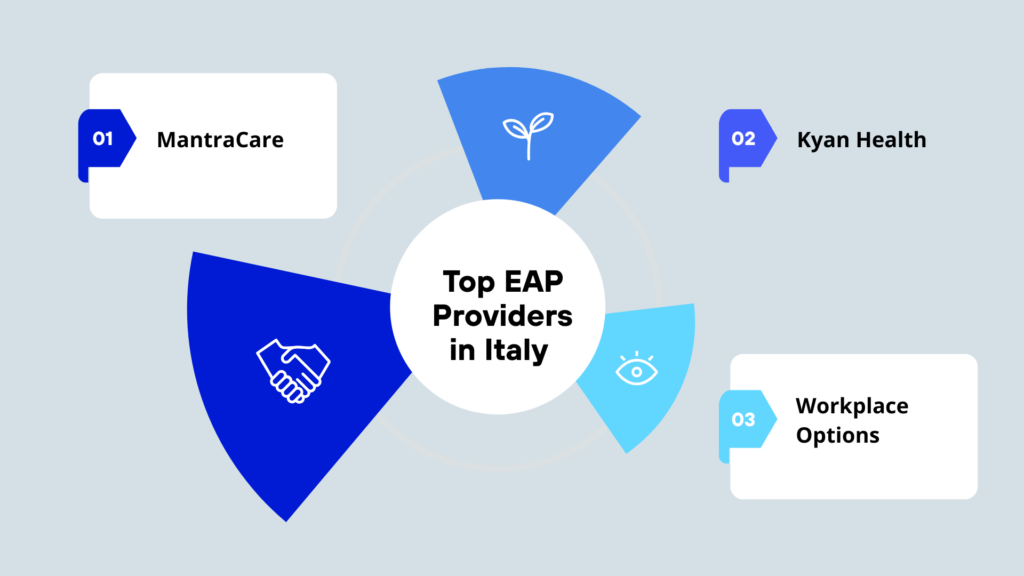
Global competence, digital innovation, and culturally flexible solutions develop the EAP market in Italy. Organizations can choose from a variety of providers offering scalable, flexible, and data-driven services.
1. MantraCare – Wholesome and Collaborative Platform
MantraCare is a digital end-to-end well-being solution that combines mental health care with coaching, lifestyle management, and financial wellness. It is designed to address multiple aspects of employee well-being within a single ecosystem.
What sets MantraCare apart is its strong focus on continuous engagement. Instead of being used only during crises, the platform encourages employees to actively participate in wellness programs, guided therapy, and self-improvement initiatives. This results in better long-term outcomes and sustained employee engagement.
Its digital-first approach ensures that employees can access support anytime and from anywhere, making it particularly effective for hybrid and remote teams.
| Focus | Best For | Key Strength |
| Holistic well-being | All company sizes | Preventive & high engagement |
2. Kyan Health – Data-Driven and Proactive Support
Kyan Health brings a modern, technology-driven approach to workplace mental health. Its platform leverages advanced analytics and smart matching systems to connect employees with the most appropriate level of care quickly and efficiently.
A key advantage of Kyan Health is its proactive approach. By identifying early signs of stress and mental health risks, it helps organizations intervene before issues escalate. Not only does this benefit the well-being of the employees, but it also lowers the organizational costs over the long term.
Further, it enables companies to assess engagement, progress, and optimization of their mental health strategies through its real-time reporting and insights.
| Focus | Best For | Key Strength |
| Digital EAP | Enterprises | Data-driven & proactive approach |
3. Workplace Options – Global & Consistent Support
Workplace Options is one of the largest and most established global EAP providers, offering comprehensive support services across multiple countries.
Its strength lies in its ability to deliver consistent, high-quality services worldwide while adapting to local cultural and workplace needs. Employees can access support 24/7 through multiple channels, including phone, video, and in-person consultations.
This makes Workplace Options an ideal choice for multinational organizations operating in Italy, ensuring a uniform employee experience across different regions.
| Focus | Best For | Key Strength |
| Global EAPs | MNCs | Worldwide coverage |
Explore how Employee Assistance Programs are transforming workplace mental health in the United States, the United Kingdom, and Australia
How to Choose the Right EAP Provider in Italy
Selecting amongst the leading EAP providers in Italy is a strategic decision that can directly impact employee well-being, productivity, and long-term organizational success.
The best EAP provider must encourage early responses and consistent management as opposed to assisting only in dire times. Prevention measures assist the employees in dealing with stress and pressure before it develops into an affliction.
Another crucial aspect is accessibility. Employees should be able to access support easily through mobile apps, online platforms, and 24/7 helplines, ensuring help is always available when needed.
Organizations should also evaluate the range of services offered. An EAP ought to be a comprehensive program that contains counselling, coaching, and practical assistance, such as financial and legal advice, so that employees can resolve various issues in one system.
Employee engagement is equally important. Programs must be user-friendly, convenient, and created in a manner that promotes frequent attendance.
Lastly, firms must select vendors that provide clear reporting and easily quantifiable insights. It aids in monitoring usage, evaluating influence, and refining well-being interventions.
Conclusion
Employee mental health in Italy is no longer just an HR initiative—it has become a key factor in building resilient, productive, and future-ready organizations.
EAPs offer an effective and organized method to assist employees, improve the workplace environment, and improve overall performance. The real value lies in selecting a provider that delivers accessible, preventive, and engaging support tailored to organizational needs.
Firms that invest in employee well-being today will be in a better position to create stronger, healthier, and sustainable teams tomorrow.
To gain a broader perspective, it is helpful to compare EAP providers in Italy with those in Poland, Switzerland, and Austria.
Frequently Asked Questions
Absolutely. Most EAP platforms are digital-first, allowing employees to access support from anywhere through apps, video counselling, and online resources.
By addressing stress and personal challenges early, EAPs improve employee satisfaction and engagement, which leads to higher retention and reduced turnover rates.
Organizations typically see returns through reduced absenteeism, improved productivity, lower healthcare costs, and stronger employee engagement.
Yes, leading EAP providers offer multilingual and culturally adapted services, ensuring employees from diverse backgrounds can access support comfortably.
Usage varies, but modern EAPs with proactive engagement features tend to see higher and more consistent usage compared to traditional reactive models.